



On November 28, 2026, the new London Museum is set to open in Smithfield, bringing the Cheapside Hoard back into public view in its fullest display to date.
For centuries, London’s Cheapside district was one of the city’s busiest shopping streets. What began as a medieval food market later became a destination for goldsmiths and luxury goods. In June 1912, workers uncovered nearly 500 jewels and precious objects beneath a cellar floor in the area, where they were believed to have been buried around 1640.
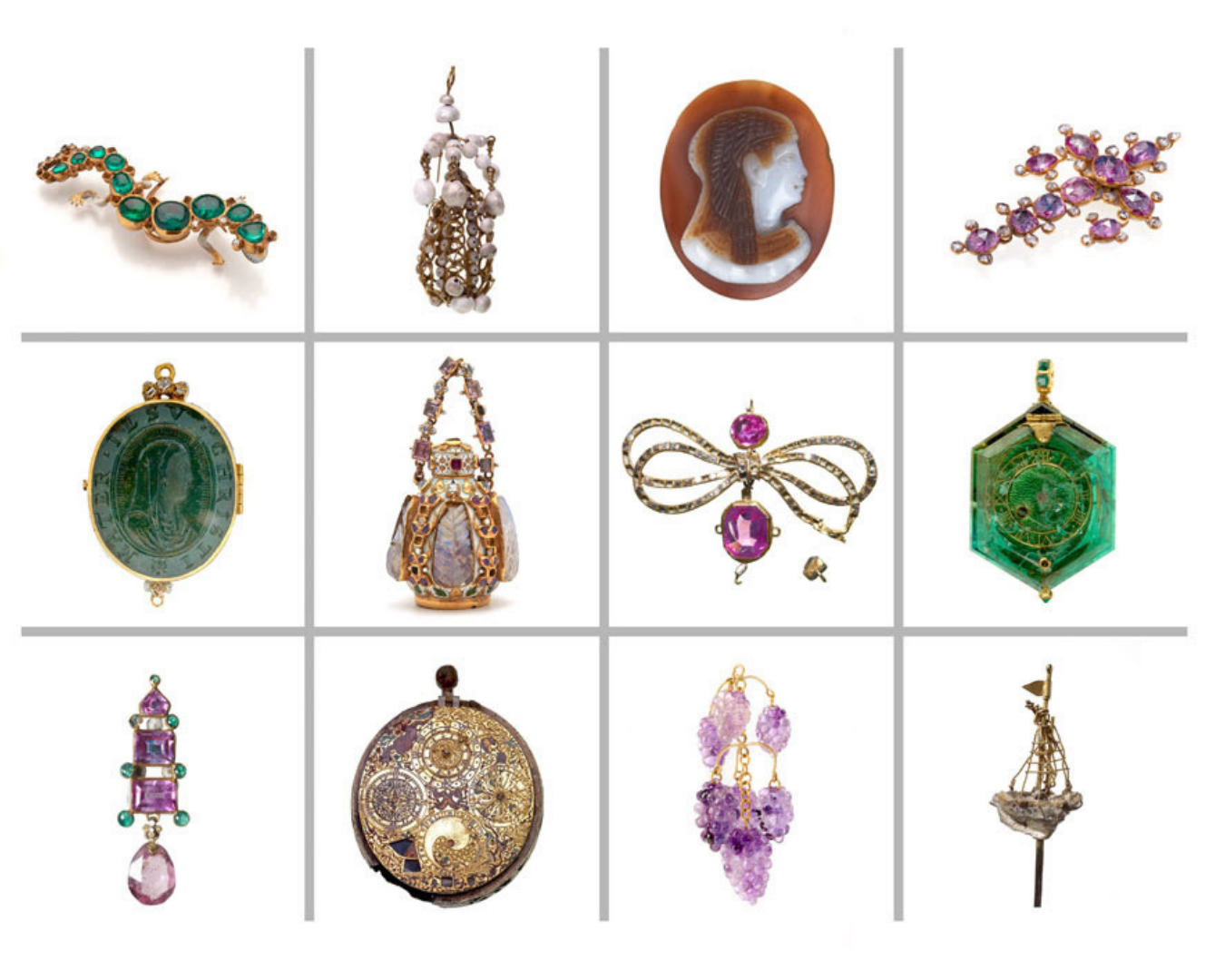
Known as the Cheapside Hoard, the collection was acquired by the London Museum in 1912, where most of it remains today. Five objects are held by the Victoria and Albert Museum, while another 25 are in the British Museum. The collection includes gold rings, amethyst pendants shaped like bunches of grapes, a jeweled salamander brooch, a decorative scent bottle, and a miniature watch fitted inside a hollowed-out Colombian emerald.
Many pieces of Elizabethan and Jacobean jewelry were melted down or altered as fashions changed. However, the Cheapside Hoard remained buried for nearly 300 years, providing a rare glimpse into the jewelry designs and craftsmanship of the time period. On the upcoming program, Beyond the Crown: Britain’s Royal & Aristocratic Jewelry, April 4–10, 2027, Museum Travel Alliance travelers will have the opportunity to explore the collection during a private tour of the London Museum.
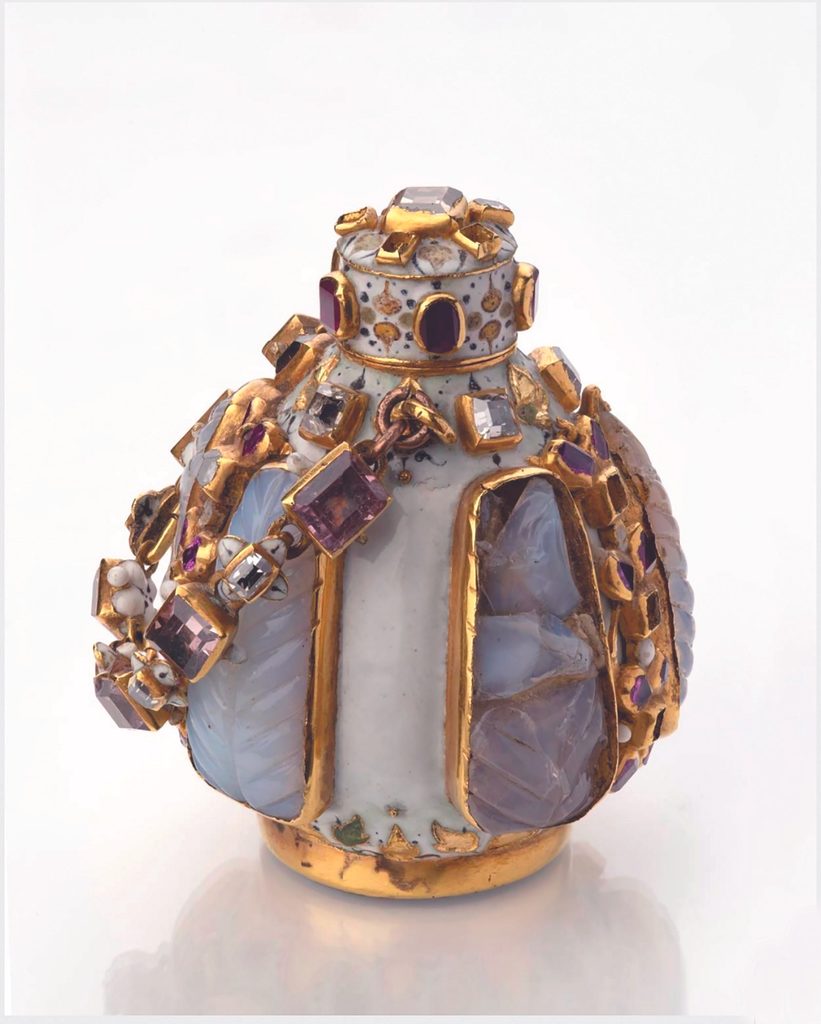
Scent bottle from the Cheapside Hoard, London Museum
More than a century after its discovery, questions remain about who buried the jewels and why. Given Cheapside’s history as a center of London’s goldsmith trade, historians believe the hoard was the stock of a goldsmith jeweler, buried as tensions were rising in England in the years leading up to the Civil Wars. However, why the owner chose to bury the jewels remains a mystery to this day.
While much about the hoard’s owner remains unknown, the jewels themselves tell us a great deal about London’s jewelry trade at the time. The collection includes gemstones sourced from around the world, including Colombian emeralds, Indian rubies and diamonds, Persian turquoise, and Afghan lapis lazuli.
These objects will be among the highlights of the new London Museum, scheduled to open on November 28, 2026, in Smithfield’s restored Victorian General Market. The museum’s Goldsmiths’ Gallery will present the Cheapside Hoard in its fullest display to date, alongside objects from the Goldsmiths’ Company collection.
Spanning 450,000 years of history, the London Museum’s collection includes seven million objects from across the city’s 33 boroughs, making it the world’s largest collection dedicated to a single urban center.
The opening of the London Museum comes just months before the Museum Travel Alliance’s journey, Beyond the Crown: Britain’s Royal & Aristocratic Jewelry, April 4–10, 2027. The program includes a private tour of the Cheapside Hoard led by Hazel Forsyth, Senior Curator at the London Museum, with renowned jewelry expert and art historian Beth Carver Wees accompanying travelers throughout the trip.
The journey also coincides with the Worshipful Company of Goldsmiths’ 700th anniversary and a new exhibition at Goldsmiths’ Hall. Additional visits include Kensington Palace before public hours to see jewels made for Queen Victoria and an after-hours private viewing of the Crown Jewels at the Tower of London.
Explore the journey and view the full itinerary.
Written by Bianca Schad, Associate, Marketing and Communications